- March 7, 2026
- 0
Understand fuel economy basics
When you compare diesel vs petrol fuel economy, you’re really looking at how far your car can travel on a litre of fuel. In Malaysia, drivers often track consumption in kilometres per litre (km/L) or litres per 100 kilometres (L/100 km). Getting to grips with these numbers helps you budget fuel expenses and plan refuelling stops during long trips.
Defining fuel economy
Fuel economy is a simple ratio of distance travelled to fuel consumed. A higher figure in km/L means you spend less on fuel for each kilometre of driving. In contrast, L/100 km represents how many litres your vehicle needs to cover 100 kilometres; the lower the number, the better your efficiency.
Measuring in Malaysia
Official fuel economy figures come from standard lab tests but real-world driving in Malaysia often tells a different story. Traffic congestion, air-conditioning usage, and variations in fuel quality can all push your consumption higher than advertised. Always use official numbers as a guideline and track your own monthly fuel logs for the most accurate picture.
Compare engine characteristics
At the heart of the diesel vs petrol fuel economy debate are two very different ways of igniting fuel in the engine. Diesel engines use compression ignition while petrol engines rely on a spark plug to start combustion. Each method influences efficiency, power delivery, and operating costs in its own way.
Compression ignition versus spark ignition
Diesel fuel auto-ignites under high compression, giving diesel engines a higher thermal efficiency compared to petrol units. That efficiency translates into more energy extracted per litre of fuel, a crucial advantage on long highway runs. Petrol engines typically run at lower compression ratios and use spark plugs, making them lighter and often cheaper to build.
Turbocharging and lean burn
Most modern diesel engines pair compression ignition with turbochargers and lean-burn strategies. By running on a lean air-to-fuel mixture, they achieve more complete combustion and boost mileage. Some petrol engines adopt turbocharging as well, but they rarely operate as lean as diesels without risking engine knock or higher emissions.
Evaluate cost implications
Fuel economy directly ties into how much you pay at the pump and over your car’s lifetime. Diesel and petrol prices in Malaysia can shift with global crude markets and government subsidies. Beyond fuel, you’ll also want to factor in maintenance, insurance, and potential resale value when making your decision.
Fuel prices in Malaysia
As of early 2026, average petrol (RON95) costs around RM 2.05 per litre while diesel sits near RM 2.20 per litre. Despite the slightly higher sticker price, diesel’s superior km/L often results in a lower cost per 100 kilometres. Below is a quick comparison of typical consumption and costs for similar compact models.
| Fuel type | Fuel economy | Price per litre (RM) | Cost per 100 km (RM) |
|---|---|---|---|
| Diesel | 8 L/100 km (30 MPG US) | 2.20 | 17.60 |
| Petrol (RON95) | 11.5 L/100 km (20 MPG US) | 2.05 | 23.58 |
Maintenance and ownership costs
Diesel engines often carry a higher upfront cost but can deliver savings in the long run. They tend to last well beyond 200,000 km with proper care, and modern diesel vehicles require fewer routine repairs compared to older designs. On the other hand, petrol cars are generally less expensive to insure and parts are more widely available, which can offset the tighter km/L for some drivers.
For a deeper dive into price points and performance, check our petrol vs diesel cars comparison article.
Factor driving conditions
Your typical driving environment can tilt the balance between diesel and petrol. Someone logging mostly urban kilometres will see different fuel economy patterns than a driver tackling long highway hauls or intercity trips.
Urban stop-start traffic
In heavy city traffic, diesel engines can suffer from lower efficiency due to increased idling time and frequent acceleration. Their turbochargers take longer to spool up, which may result in higher consumption in stop-start conditions. Petrol engines, on the other hand, often warm up faster and deliver more responsive throttle feel in tight urban settings.
Highway cruising
If your commute involves steady highway speeds, diesel’s efficiency advantage really shines. Diesel engines maintain peak torque at lower RPMs, which reduces fuel burn at cruising speeds. That characteristic makes them ideal for long stretches on the North-South Expressway, where consistent velocity dominates your journey.
Consider environmental impact
Fuel economy isn’t just about cost per litre; it also affects emissions and local air quality. Both diesel and petrol have environmental trade-offs that you should weigh based on your driving habits and regional regulations.
Emissions and CO2 output
Per litre, diesel contains roughly 15 percent more energy than petrol, so it can produce more CO2 if consumed at the same rate. However, its better km/L means lower CO2 emissions per kilometre. Petrol cars typically emit fewer particulates and nitrogen oxides thanks to cleaner-burning processes, while advanced diesel engines now use selective catalytic reduction (SCR) and particulate filters to meet stringent Euro 6 standards.
Long term sustainability
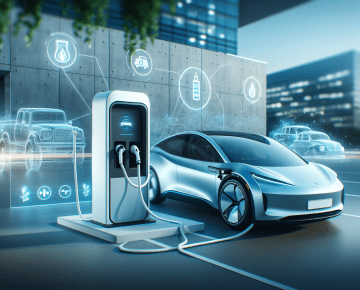
Malaysia’s shift toward Euro 5 and Euro 6 fuel standards has narrowed the emissions gap, and forthcoming regulations may encourage even cleaner engine technologies. At the same time, you can explore electrified options—hybrids and battery-electric vehicles—that further reduce tailpipe emissions. See our hybrid cars fuel efficiency guide and learn more about electric vehicle charging costs to compare overall impact.
Make your fuel choice
Ultimately, your decision hinges on how and where you drive, plus your budget for fuel and maintenance. Diesel might seem expensive upfront, but it often pays off for high-mileage drivers. Petrol cars cost less initially and perform better in stop-start conditions, making them appealing for daily city commutes.
When diesel makes sense
Choose a diesel vehicle if you rack up over 20,000 km per year or haul heavy loads. The higher compression ratio and turbocharged efficiency reward consistent long-distance driving with fewer stops at the pump. Diesel’s durability also means you can enjoy lower repair costs after many years on the road.
When petrol is better
If you drive mainly inside Kuala Lumpur or shorter suburban routes, a petrol engine may be a wiser fit. Lower purchase price, quieter operation, and faster warm-ups deliver smoother daily city use. You won’t sacrifice much efficiency over shorter trips, and service centres for petrol cars are plentiful.
Exploring hybrid and EV options
You don’t have to pick strictly between diesel vs petrol fuel economy. Hybrid cars offer a middle ground by mixing an internal combustion engine with electric power—learn more in our hybrid vs electric car pros and cons post. And if you’re curious about going fully electric, our breakdown of electric vehicle charging costs will help you plan your budget and route.
Fuel type doesn’t have to limit you. By matching engine characteristics, ownership costs, and environmental factors to your driving profile, you’ll find the most cost-effective and eco-friendly choice for your Malaysian roads.
- March 7, 2026
- Vehicle
related posts